About Us
The essence of Chamarel
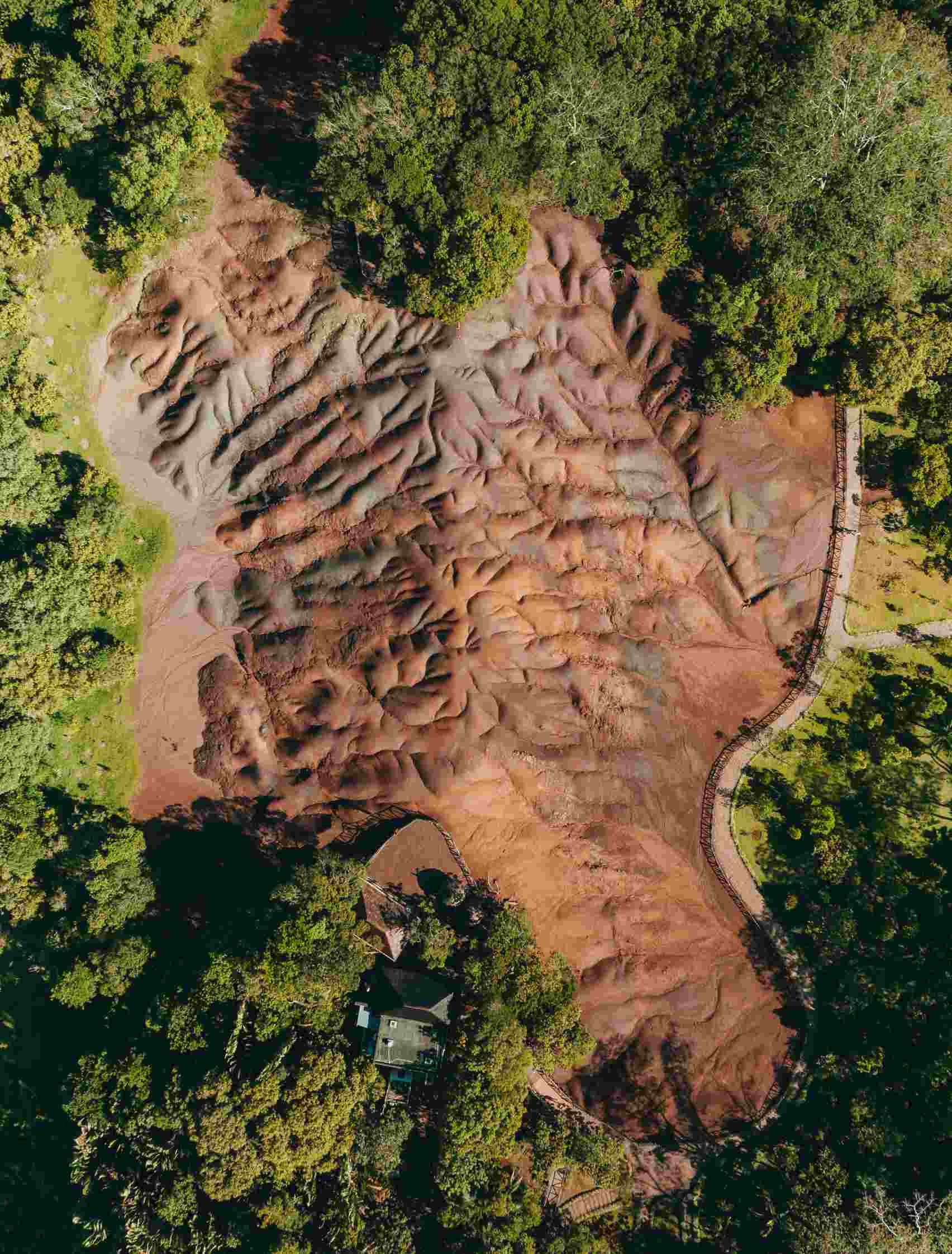
Chamarel 7 Coloured Earth Geopark invites you to witness millions of years of history through rare volcanic dunes and the island's tallest waterfall, a striking natural feature. Since the late 1960s, the site has shaped the identity of Chamarel, a region known for its deep-rooted history and panoramic highland views.

Origins of the land
The coloured earth was created by volcanic basalt cooling at uneven rates and transforming into clay.

Did You
Know?
The coloured dunes were formed by lava, oxides and erosion !


01
A Vocalnic Beginning
Tectonic shifts and eruptions gave rise to Mauritius’ mountains, reefs and coastlines, forming the base of its geological identity.


02
Lava and Climate
Between 1.7 and 3 million years ago, lava flows cooled into basalt under a tropical climate, triggering deep chemical decomposition.


03
Nature's Color Palette
Iron and aluminium oxides in the clay created layered hues, ranging from deep red and brown to blue and violet.
A Sustainable commitment
Caring for land and people
Rooted in the Now for Tomorrow programme, our sustainability approach focuses on biodiversity, circular economy, energy transition and inclusive development. Be part of the change.
Learn more